
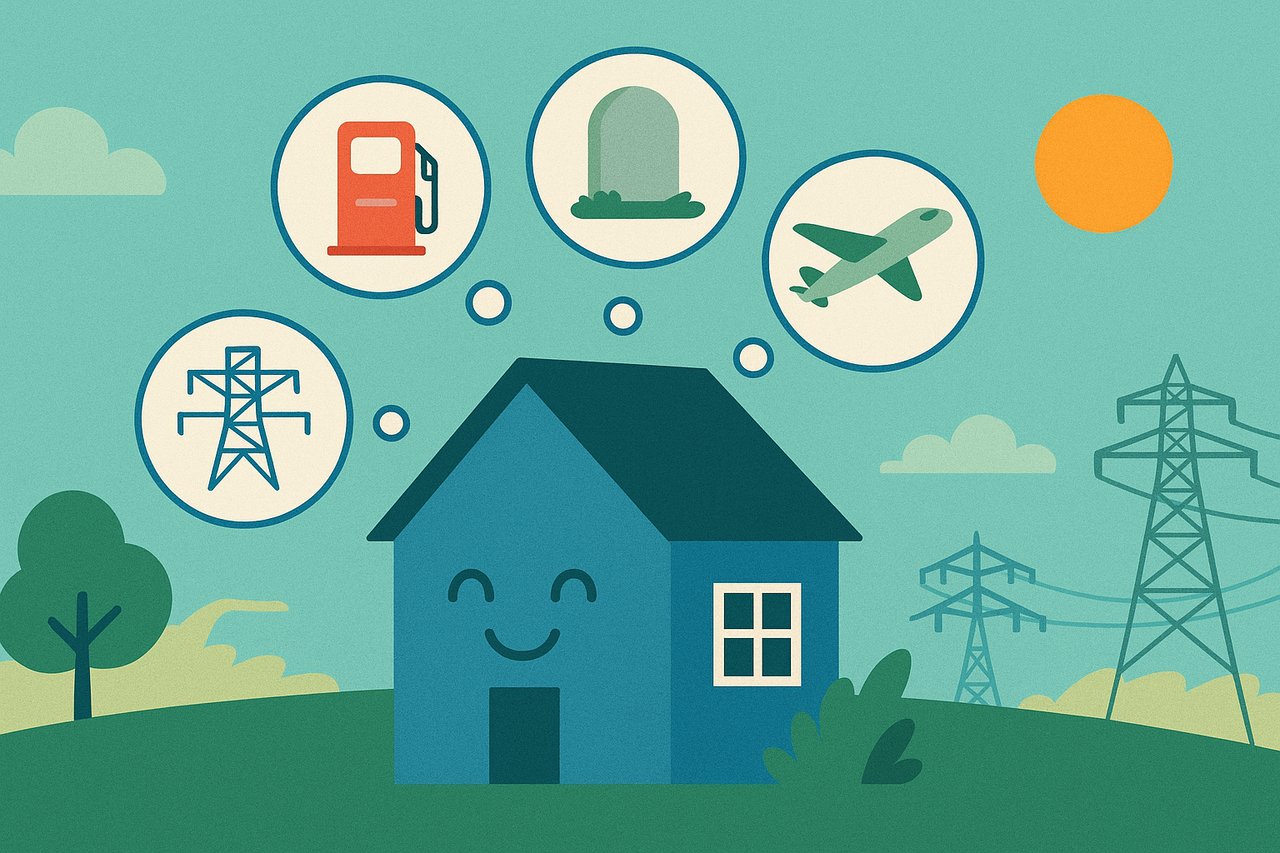
When I first started in real estate, 10 years ago, most buyer conversations focused on the basics: location, price, square footage, schools, resale value, and "what are these countertops made of?". And those things still matter — a lot.
But lately, especially as I think about my own family and raising young kids, I’ve found myself (and many of my clients) asking deeper questions. What’s around the home? What’s under the ground? What's in the air? And are there environmental factors that could impact long-term health, comfort, or peace of mind?
Environmental health is something I’ve personally been learning more about — through reading, podcasts, and simply paying attention to the questions buyers are asking more frequently. This post is not meant to be alarmist, definitive, or medical advice. I’m not an expert — not even close! I’m a Realtor, a community member, and a parent who believes informed buyers make better decisions, and that asking thoughtful questions is always a good thing.
So consider this a conversation starter — a way to plant a seed for curious buyers and encourage research, not fear.
Environmental Location Questions Buyers Are Asking More Often
1. Is the home near a cemetery or burial ground?
Why this question comes up:
This surprised me at first — but after learning more, I understand why some buyers think about it. Traditional burial practices may involve embalming fluids (including formaldehyde) and coffins made of treated wood or metal. Over long periods of time, some studies suggest that materials from burial sites can affect surrounding soil or groundwater conditions.
What research suggests (with important caveats):
-
Certain studies have found that burial sites can introduce compounds into soil and groundwater depending on depth of graves, soil composition, water tables, and cemetery design.
-
There is very limited evidence showing meaningful airborne exposure for nearby residents. In other words, I haven’t found credible science suggesting that living near a cemetery automatically means breathing harmful chemicals.
-
Modern cemeteries are regulated, and risk varies widely by site, age, and local environmental conditions.
What buyers may want to consider:
-
How old is the cemetery, and how was it designed?
-
Is the home on city water or well water? (it will most likely be city water, but still good to double check)
-
Are there known groundwater studies in the area?
This is less about a hard “yes or no” and more about personal comfort and curiosity — especially for buyers who are already environmentally sensitive.
2. Is the home near a golf course or heavily maintained landscaped area?
Why this question comes up:
Golf courses are beautiful and often homes backing to or overlooking a golf course can sell for more — but maintaining that beauty often requires fertilizers, herbicides, fungicides, and pesticides. For some buyers, especially families with children or pets, that raises questions about long-term exposure.
What research has shown:
-
Observational studies have explored potential associations between proximity to golf courses and increased risk of certain illnesses, largely due to chemical exposure used in turf management.
-
The research does not conclusively prove causation, but it does suggest this is a reasonable factor to consider, especially depending on how the course is managed.
What to think about:
-
How close is the home to the course? Backyard adjacency vs. a buffer matters.
-
Does the course disclose maintenance and spraying schedules?
-
Is the home on well water or municipal water?
For some buyers, the lifestyle and view outweigh concern. For others, it’s simply something they want to understand better before moving forward.
3. Is the home close to a gas station?
Why this question comes up:
Beyond odor and traffic, gas stations raise concerns about underground fuel storage, spills, and long-term exposure to volatile organic compounds.
What’s generally understood:
-
Exposure risks tend to be higher the closer a home is to a gas station — particularly older stations with underground storage tanks.
-
Factors such as soil conditions, groundwater movement, and station maintenance play a significant role.
What buyers may want to ask:
-
How long has the station been there?
-
Are there records of leaks, spills, or remediation?
-
How close is “close” — next door vs. across a major intersection?
This is a scenario where awareness and due diligence matter more than blanket assumptions.
4. Is the home near major power lines or transmission corridors?
Why this question comes up:
In areas like Castle Pines North — where large transmission lines and power infrastructure are visible — buyers often ask whether this is purely an aesthetic issue or something more.
What the research says:
-
Studies on electromagnetic fields (EMFs) show mixed and inconclusive results.
-
Some classifications list certain EMFs as “possibly carcinogenic,” but there is no clear evidence proving that living near power lines causes illness.
What matters most:
-
Distance from the lines
-
Type of power infrastructure
-
Personal comfort and peace of mind
Even when science isn’t definitive, buyer comfort still matters — and that’s okay.
5. Is the home near a major highway or high-traffic road?
Why this matters beyond noise:
Highways bring more than traffic sounds. Vehicles deposit oil, fuel residues, brake dust, tire particles, and heavy metals on roadways.
In Colorado especially, snowmelt and rain runoff can wash these substances — along with de-icing chemicals used in winter — into nearby soil and drainage systems.
Things buyers may want to consider:
-
Distance from the roadway
-
Whether the home sits above or below road grade
-
Presence of trees, berms, or sound walls
-
Outdoor lifestyle (kids, pets, gardening, patios)
-
Water source (city vs. well)
Again, this isn’t about fear — it’s about understanding the environment you’ll live in year-round.
6. Is the home near an airport or under a flight path (international or municipal)?
Why this question comes up:
Airports aren’t always top of mind for buyers — until they are. I’ve seen this firsthand, including clients who moved to Englewood and later realized their home sat directly under the flight path for Centennial Airport. At first, the plane noise felt manageable. Over time, as flights increased and patterns shifted, the constant overhead traffic became exhausting.
With continued development around Denver International Airport (DIA) and heavy use of municipal airports like Centennial, Rocky Mountain Metro, and others, more homes are now affected by flight paths than buyers may initially realize.
Noise is the obvious concern, but more buyers are also asking about air quality and long-term exposure when planes are flying overhead all day, every day.
What research and environmental studies suggest:
-
Aircraft emit pollutants including ultrafine particulate matter (UFPs) and nitrogen oxides during takeoff, landing, and low-altitude flight. These emissions are most concentrated under flight paths and closest to airports.
-
Some studies have shown associations between long-term exposure to aircraft-related air pollution and increased respiratory or cardiovascular concerns in populations living very close to airports.
-
Noise pollution itself is also associated with increased stress, sleep disturbance, and reduced quality of life over time — even when people believe they’ll “get used to it.”
Important context:
-
Exposure varies widely based on altitude, frequency of flights, prevailing winds, and whether aircraft are climbing, descending, or circling.
-
Municipal airports with flight training programs (like Centennial) can create more repetitive, lower-altitude noise than some larger commercial airports.
-
Flight paths can change over time as air traffic increases or patterns are adjusted — what feels fine today may feel very different a year later.
What buyers may want to consider:
-
Is the home near an airport or directly under a common flight path? (These are not always the same thing.)
-
How frequent are flights during the day — and early morning or evening hours?
-
Is the airport primarily commercial, private, or a training hub?
-
How sensitive are you (or your family) to ongoing noise or sleep disruption?
-
For buyers already thinking about air quality, is constant overhead flight something you’re comfortable with long term?
For some people, airport proximity is a non-issue — or even a perk. For others, especially those working from home, raising young kids, or simply craving quiet, it can significantly impact daily life.
Home-Specific Environmental Factors (Especially Relevant in Colorado)
Radon
Radon is a naturally occurring radioactive gas that enters homes from the soil. It’s extremely common in Colorado — which is also why it’s well-understood and easily mitigated.
-
Testing is simple and inexpensive
-
Mitigation systems are effective and affordable
-
Finding radon doesn’t mean “don’t buy” — it means “address it”
Older Homes & Legacy Materials (Including Asbestos)
Homes built before the 1980s may contain asbestos in flooring, insulation, ceilings, or ductwork.
-
Asbestos is not automatically dangerous if it’s undisturbed
-
It becomes a concern primarily during renovations
-
Awareness and proper professional handling are key
An Environmental Awareness Checklist for Home Buyers
Questions worth asking — not reasons to panic
Location & Surroundings
-
⬜ Near major highways or high-traffic roads
-
⬜ Close to gas stations or fuel storage
-
⬜ Adjacent to golf courses or maintained turf
-
⬜ Near cemeteries or historic burial grounds
-
⬜ Presence of large power lines or transmission corridors
Water & Soil
-
⬜ City water vs. well water
-
⬜ Drainage patterns and slope
-
⬜ History of industrial or commercial use nearby
-
⬜ Willingness to test water or soil if concerns arise
Air Quality & Exposure
-
⬜ Traffic-related pollution or odors
-
⬜ Prevailing winds and airflow
-
⬜ Time spent outdoors at the property
Home-Specific Considerations
-
⬜ Radon tested
-
⬜ Radon mitigation installed if needed
-
⬜ Age of home and renovation plans
-
⬜ Asbestos awareness prior to remodeling
-
⬜ HVAC and ventilation quality
What This Means — And How I Help as Your Realtor
There’s no such thing as a “perfect” home. Every property has trade-offs, and every buyer has different priorities.
My role isn’t to tell you what should matter — it’s to help you understand what might matter so you can decide confidently. Environmental awareness isn’t about eliminating options; it’s about asking better questions, doing appropriate research, and choosing a home that aligns with your lifestyle and comfort level.
If you’re a buyer who values long-term health, livability, and a fuller picture of where you’re investing your life — I’m always happy to have those conversations.
The best homes aren’t just beautiful. They feel right — inside and out.